
Phishing Attacks in 2025: Risks, Trends, and Prevention
The Ultimate Guide to Phishing Awareness
Phishing has become one of the most frequent and financially damaging cyber threats affecting businesses across all industries.
Phishing involves fraudulent attempts by cybercriminals to deceive individuals into revealing sensitive information, such as login credentials, banking details or company data. These attacks are typically carried out via fraudulent emails or imitation websites designed to trick recipients. In 2025, the threat of phishing has evolved into a particularly insidious danger due to its heightened sophistication and increased targeting. Unlike the past, where attackers relied on mass emails filled with poorly constructed messages. Modern phishing scams are crafted to be highly convincing and tailored to each target, making them far more challenging to detect. These modern phishing schemes often impersonate trusted brands, reputable companies, or even familiar colleagues, making it exceedingly difficult for the average person to discern genuine communication from malicious attempts. Additionally, attackers now utilise social engineering techniques to exploit psychological triggers, thereby enhancing the believability of their messages.
Top Phishing Techniques Businesses Have Faced
Phishing attacks are progressing at an unprecedented rate, with cybercriminals adopting sophisticated and tailored strategies to outsmart conventional security measures. As we move through 2025, businesses across the UK and around the world must brace themselves for an increasingly advanced wave of phishing threats, a trend propelled by the rise of artificial intelligence, social engineering tactics, and cutting-edge technologies.Implementing advanced email security solutions can significantly reduce the risk of these attacks.
Email Phishing and Spoofed Domains
Email phishing continues to be the most widespread form of cyberattack, persistently targeting both businesses and individuals. Hackers send messages that appear to come from trusted sources such as clients, colleagues or well-known service providers, prompting the recipient to click on a malicious link, download a harmful file, or provide confidential information. One alarming trend in 2025 is the rise of spoofed domains used to mimic trusted organisations and deceive recipients. Cybercriminals register domain names that closely resemble legitimate ones; for example, they might replace the letter "l" with the number "1" or use .co instead of .com. These subtle alterations often go unnoticed by busy employees, resulting in credential theft or unauthorised access to company systems.
Key Signs of Email Phishing
Slightly misspelt sender addresses.
Unexpected attachments or links.
Generic greetings or urgent requests (e.g., "Act Now").
AI-Powered Phishing Campaigns
In recent years, artificial intelligence has emerged as a formidable tool in the realm of cybercrime, particularly in executing highly deceptive phishing campaigns. Cybercriminals leverage AI technologies to create phishing emails and chat messages that are strikingly convincing, mimicking the tone, language and writing styles of real individuals. This evolution in phishing tactics has enabled a shift from traditional mass phishing attacks to more targeted approaches, commonly referred to as spear phishing. For instance, an employee working in finance might receive an email purporting to be from the "finance director", urgently requesting a fund transfer. The message not only looks legitimate but also utilises language that is convincingly familiar. Businesses across the UK must recognise that the advent of AI tools is effectively lowering the barriers to entry for cybercriminals, enabling even less skilled attackers to execute sophisticated ploys. As the landscape of cyber threats continues to evolve, vigilance and advanced security measures are paramount for organisations aiming to protect themselves against these increasingly sophisticated attacks.Performing routine IT audits allows you to spot weaknesses before they can be targeted by cyber threats.
Quishing (QR Code Phishing)
Quishing or QR code phishing, has quickly become one of the most prevalent cyber-attack methods in 2025. This technique involves using QR codes that are embedded in emails, posters or online advertisements. When scanned, these codes can direct users to fraudulent websites that aim to steal login details or compromise devices with malware. Since QR codes are visually unreadable, users often don’t realise they are being led to a fraudulent page until it’s too late. Many organisations now utilise QR codes for login and verification processes, making them an appealing target for attackers.
Preventive tip: Educate employees to never scan unknown or unsolicited QR codes, even if they seem to originate from a trusted source.
Deepfake and Voice Phishing
With advancements in deep learning and synthetic media, deepfake phishing has become a significant threat. Attackers can clone voices or faces to impersonate executives during video or audio calls. For instance, an employee might receive a voicemail that sounds exactly like their manager, instructing them to take urgent action. This type of phishing, often referred to as vishing, blurs the lines between reality and deception. In high-pressure situations, employees may act quickly, making them more susceptible to manipulation.
How to defend: Always verify unusual or urgent requests via a secondary communication channel before acting.
Social Engineering via LinkedIn or SMS
Cybercriminals now frequently use LinkedIn, SMS, and other direct messaging platforms to carry out advanced social engineering attacks. By building trust over time, they deceive targets into clicking harmful links or disclosing confidential information. Cybercriminals on LinkedIn frequently pose as recruiters, clients or professional connections to gain trust and launch scams. Simultaneously, SMS phishing, commonly known as smishing, involves text messages that appear to be from banks, delivery services, or government agencies. These methods prey on human trust and a sense of urgency instead of exploiting technical weaknesses.
Watch out for:
Unsolicited job offers or connection requests
Messages with shortened links
Messages stating there is “unusual activity” or requesting verification codes
Real-World Impact: Phishing Attack Case Studies
Small Business Breaches
In Greater Manchester, a serious security breach affected public housing websites operated by the Manchester, Salford and Bolton councils. The attack stemmed from a compromise in their shared third-party housing system, Locata. As a result, thousands of residents were sent phishing emails prompting them to "activate your tenancy options", likely aiming to harvest sensitive information such as personal details and payment data. Though local businesses weren’t directly targeted in this case, it demonstrates how smaller organisations relying on external platforms can still expose clients to phishing cascades. At the same time, small businesses throughout the region have experienced targeted spear-phishing attempts disguised as communications from reputable organisations, often involving fake invoices or tax messages. In one incident, a fraudulent email appeared to originate from “noreplymetering@thameswater.co.uk” but was actually tied to a compromised Salesforce domain. The scam was particularly convincing, as it included correct personal information, making it far more difficult to spot. These campaigns frequently exploit trust and urgency, often resulting in stolen credentials or unauthorised internal emails sent to contacts.
Enterprise‑Level Data Leaks
Nationally, HM Revenue & Customs (HMRC) uncovered phishing attempts in 2024 aimed at gaining unauthorised access to around 100,000 taxpayer accounts. While no direct financial losses were reported, the incident carried a serious risk of fraudulent claims and exposure of sensitive personal and financial data. Authorities swiftly responded with arrests, and the affected individuals did not require further action. Despite the lack of immediate losses, the event significantly shook public confidence in the security of digital systems and highlighted vulnerabilities in even trusted government platforms.
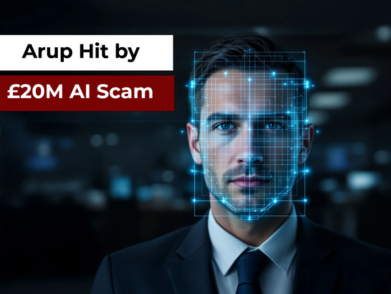
A striking example of modern phishing involved Arup, a UK engineering consultancy, which fell victim to a sophisticated deepfake scam through a video call. An employee unknowingly joined a virtual meeting featuring AI-generated deepfake representations of senior executives, resulting in the unauthorised transfer of funds. By the time the deception was discovered, Arup had suffered a loss of approximately £19.7 million in total. This incident underscores that even organisations with strong security measures are susceptible to AI-enhanced phishing attacks, emphasising the urgent need for advanced threat detection, employee training, and multi-layered cybersecurity strategies.
How to Identify a Phishing Attempt
Phishing scams are becoming more sophisticated, making it vital for individuals and businesses to stay alert. Here are key signs to help you recognise a phishing attempt before it's too late:
Unfamiliar Sender or Domain: The email may appear to come from a trusted company, but closer inspection often reveals misspelt or suspicious domains (e.g., "micr0soft.com").
Urgent Tone or Threats: Messages that pressure you with phrases like “Your account will be closed!” are designed to rush your judgement and provoke a hasty response.
Requests for Login or Payment Information: Any email that asks for passwords, PINs, or payment details is highly suspicious.
Unusual Links or Buttons: Always hover over links to inspect the actual URL. If the link does not match the claimed destination, do not click on it.
Unexpected Attachments: Files you were not expecting, especially those with .zip, .exe or .html extensions, can carry malware or phishing scripts.
Generic Greetings: Messages that begin with phrases such as “Dear User” or “Dear Customer” are often signs of mass phishing attempts and show a lack of personalisation.
Poor Grammar or Spelling: Official communications from reputable companies rarely contain glaring errors in spelling or grammar.
Strategies to Protect Your Business from Phishing
Protecting your organisation from phishing attacks in 2025 requires a multi-layered approach combining technology and training. Key strategies are outlined below:
Employee Awareness Training: Regular training helps staff recognise phishing emails and social engineering tactics. Simulated phishing tests and clear reporting procedures can significantly reduce click-through rates on malicious links.
Multi-Factor Authentication (MFA): MFA adds an essential security layer. Even if login credentials are compromised, attackers can’t access systems without the second verification step—reducing the success rate of phishing dramatically.Companies leveraging Microsoft 365 security tools need to make sure Multi-Factor Authentication (MFA) is correctly set up for every account.
Email Filtering & Threat Detection Tools: Modern email security tools automatically scan for malicious links, spoofed senders, and suspicious attachments. Implementing AI-driven threat detection can help identify phishing attempts in real-time, blocking them before they reach the inbox.
Secure Backups and Incident Response Plans: Regular, encrypted data backups ensure business continuity even if phishing leads to data breaches or ransomware. A well-documented incident response plan helps minimise downtime and guides your team through containment and recovery.
Seek Expert Support: If your organisation regularly encounters suspicious emails, consider partnering with an experienced managed IT support provider . The right support team can enhance your email security, block potential threats before they reach staff, and deliver tailored awareness training to reduce risks.
By combining these strategies, businesses can stay one step ahead of today’s evolving phishing threats and protect sensitive data, systems, and reputations.
How Voktis Can Help Safeguard Your Business
Voktis helps businesses combat phishing threats through layered and proactive cybersecurity services. Our email security solutions filter out malicious content, block spoofed domains and detect suspicious links before they ever reach your team’s inbox. We also deliver tailored cybersecurity training to boost employee awareness, using real-world phishing simulations and up-to-date threat examples to build a vigilant workforce. Additionally, our proactive threat monitoring service leverages intelligent tools to detect unusual activity across your systems, enabling swift responses to potential breaches. With secure infrastructure and a focus on prevention, Voktis supports your business in staying ahead of modern phishing attacks.
Final Thoughts on Phishing in 2025
Phishing in 2025 represents one of the most pressing cybersecurity challenges for businesses of all sizes. No longer limited to poorly written spam emails, today’s phishing campaigns use AI-generated content, deepfake videos and sophisticated social engineering to deceive even the most vigilant employees. Attackers are targeting inboxes, messaging platforms and even QR codes to bypass traditional defences. The consequences can be severe, from financial losses and data breaches to long-term reputational damage. Protecting your organisation requires a proactive, multi-layered strategy combining employee awareness training, multi-factor authentication and AI-powered threat detection tools. Regular IT audits and a clear incident response plan are also essential to respond quickly when threats emerge. By understanding the latest phishing tactics and investing in prevention, businesses can stay one step ahead of cybercriminals, safeguard sensitive information, and maintain customer trust in an increasingly complex digital landscape. In cybersecurity, preparation is your strongest shield.
FAQs
What is phishing and how does it work? Phishing tricks people into giving away sensitive data by posing as a trusted source, often through fake emails or websites. Attackers then steal information or install malware.
How do you recognise a phishing email? Look out for spelling or grammar errors, urgent-sounding messages, unusual sender addresses, and links with mismatched URLs. Confirm any unexpected requests directly through official channels.
What are AI-powered phishing attacks? These use AI to create highly realistic, personalised scams, including deepfake audio or video, making phishing harder to spot and more convincing.
How can businesses train staff to avoid phishing scams? Regular phishing simulations, clear awareness training, and easy reporting channels help staff recognise and respond to phishing attempts effectively.
What should I do if my company falls victim to a phishing attack? Immediately alert IT, change compromised passwords, disconnect affected systems, report to authorities, and follow your incident response plan to limit damage.

