
The UK PSTN Switch-Off: What Every Business Must Do Before January 2027
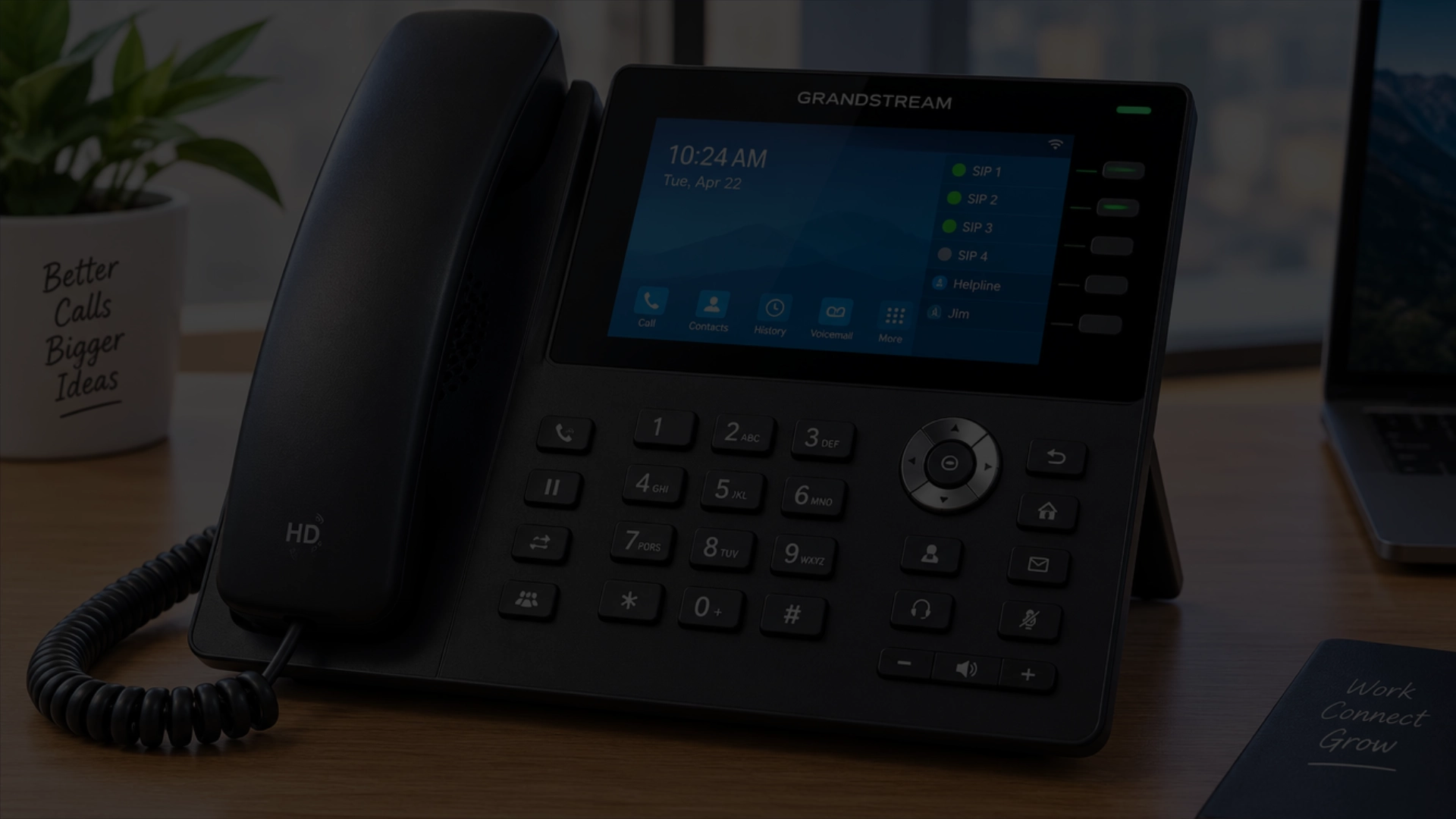
PSTN Switch-Off 2027: What UK Businesses Need to Do Now
The clock is now running on one of the biggest changes to UK business communications in a generation. By 31 January 2027, the UK's traditional telephone network, the PSTN, will be switched off for good, and every business still relying on it needs a plan before that date arrives.
This isn't a distant, theoretical deadline anymore. As of December 2025, Openreach only needs to give businesses 90 days' notice before disconnecting a line. That means the gap between "we should look into this" and "our phones have stopped working" has never been shorter, and it's only going to keep shrinking as the final date approaches.
The good news: businesses that start preparing now have every opportunity to turn this into an upgrade rather than a scramble.
What Is the PSTN Switch-Off?
The Public Switched Telephone Network (PSTN) is the copper-based infrastructure that has carried UK landline calls for decades. Alongside it, ISDN, the digital-over-copper standard many business phone systems use, is being retired too.
Both are being phased out because the underlying infrastructure is old, increasingly expensive to maintain, and unable to properly support modern, data-heavy communications. In their place, telecoms providers are moving every customer onto internet-based calling, primarily Voice over Internet Protocol (VoIP), delivered over full-fibre broadband.
By January 2027, PSTN and ISDN lines will simply stop working, full stop. There's no opt-out and no extension.
Why UK Businesses Need to Act Now, Not Later
For most organisations, the real danger isn't the switch-off event itself. It's leaving preparation until there's no time left to do it properly.
A phone line rarely does just one job. Businesses frequently discover, often too late, that other equipment has been quietly running through the same legacy connection for years. If those devices aren't identified and migrated ahead of time, the switch-off can cause disruption well beyond "the phones are down."
Planning early gives you three things a last-minute scramble can't:
Time to audit exactly what's connected to your legacy lines.
Choice over your replacement technology, rather than whatever's available in an emergency.
Control over the timeline, instead of being forced into a rushed changeover when Openreach's 90-day notice lands.
What Could Be Affected
Your phone system is often the most visible thing running on a legacy line, but rarely the only one. Businesses should review any equipment connected via analogue or ISDN lines, including:
Traditional and ISDN-based phone systems
Fax machines
Payment and card terminals
Alarm and security systems
Lift emergency phones
Door-entry systems
Modems and other connected equipment
Some of this equipment already has a straightforward digital alternative. Other systems may need specialist replacement or reconfiguration, which is exactly why a full audit before migration matters. Performing a FREE IT audit is a good way to find out exactly what is connected before you plan anything else.
The Risks of Leaving It Too Late
Communication disruption: If your phone service or connected equipment relies on legacy infrastructure, it may simply stop working once that infrastructure is withdrawn, with no warning beyond the 90-day notice window.
Critical equipment failure: Alarms, payment terminals and emergency communication systems can all be affected. Missing one of these in your planning isn't just an inconvenience. It can be an operational or safety issue.
Rushed decisions: Waiting until your line is scheduled for disconnection leaves little time to properly compare providers, test a new system, or train staff on it.
Higher costs: Emergency migrations are almost always more expensive than a planned one. Early assessment means you can budget properly instead of paying a premium to fix things at the last minute.
What Your Business Should Do Now
Start by getting a clear picture of your current setup. Ask:
Which telephone services does our business currently use?
What devices are connected to those services?
Does our phone system rely on PSTN or ISDN?
Can our current broadband handle a digital phone system?
Is any of our equipment going to need replacing?
Can we keep our existing business phone numbers?
Once you know what you're working with, you can build a migration plan on your own timeline, not Openreach's.
VoIP: The Modern Replacement for Traditional Phone Systems
For most businesses, the switch-off is also a genuine opportunity to move to a smarter phone system. VoIP delivers calls over your internet connection instead of a physical phone line, and modern platforms go well beyond basic calling, with features such as call forwarding, voicemail-to-email, auto attendants and intelligent call routing.
For teams that are hybrid, spread across multiple sites, or need to take calls on the move, VoIP turns a fixed desk phone into a flexible communications platform that follows your business rather than a building.
Why Connectivity Matters Just as Much
VoIP is only as good as the network underneath it. Moving to internet-based calling on an unreliable broadband connection just trades one problem for another. A dependable FTTP connection gives you the foundation modern cloud communications actually need, and it's worth having your wider network assessed to make sure voice traffic can run smoothly alongside everything else your business does online.
Don't Just Replace Your Phone System, Modernise It
Treat this as more than a like-for-like swap. Done properly, a PSTN migration can help your business:
Support remote and hybrid working
Improve customer call handling
Manage calls consistently across multiple locations
Scale communications as the business grows
Reduce dependence on physical telephone infrastructure
Add modern features without a full system overhaul

How Voktis Can Help Your Business Prepare
Moving away from legacy telephone services can feel complicated, especially once you realise how many other systems might be quietly connected to the same line. At Voktis, we help businesses across Oldham, Manchester and the wider UK assess their current setup, identify what's actually at risk, and plan a migration that fits their operations, not a generic template.
Our team can help you:
Assess your existing telephone and connected infrastructure
Identify systems that may be affected by the switch-off
Plan and manage your PSTN migration
Implement VoIP and modern business telephony
Improve connectivity with FTTP and Leased Lines
Support remote and hybrid communication needs
Minimise disruption throughout the transition
Provide ongoing support as part of our Managed IT Services
Not sure where to start? Our free IT audit is a good first step toward finding out exactly what's connected to your legacy lines before you plan anything else.
Final Thoughts on the PSTN Switch-Off
The PSTN switch-off is a genuine deadline with a fixed date: 31 January 2027, and shrinking notice periods between now and then. For businesses still running legacy telephone infrastructure, the single most useful thing you can do is start the audit now, not when a 90-day notice letter turns up.
Businesses that plan ahead get a smoother transition, avoid unnecessary disruption, and come out the other side with more flexible, more capable communications than they had before.
Ready to find out what's connected to your legacy lines? Get in touch with Voktis or start with a free IT audit.
FAQs
What is the PSTN switch-off?
The PSTN switch-off is the retirement of the UK's traditional copper telephone network, with providers moving all customers to digital, internet-based communications by 31 January 2027.
Will my business landline stop working?
If your service relies on PSTN or ISDN infrastructure, yes, it will need to be migrated before the network is withdrawn. Since December 2025, providers only need to give 90 days' notice before disconnecting a line, so it's worth checking your setup well before that notice arrives.
What equipment could be affected by the PSTN switch-off?
Commonly affected equipment includes phone systems, fax machines, alarms, payment terminals, lift phones and door-entry systems, which is anything connected via a legacy analogue or ISDN line.
Is VoIP the replacement for PSTN?
VoIP is the main digital alternative for business voice calls, delivering calls over an internet connection with features traditional phone lines can't easily match.
Can I keep my existing business telephone number?
In most cases, yes. Number porting is a standard part of migrating to a new digital phone service. Your provider should confirm this as part of the switch.
Does my business need better broadband for VoIP?
A reliable connection is essential for good call quality. It's worth having your broadband and wider network assessed before migrating your phone system, not after.
When should my business start preparing?
Now. With notice periods as short as 90 days, waiting until you're notified leaves very little time to audit your systems, compare options and test a new setup properly.

